

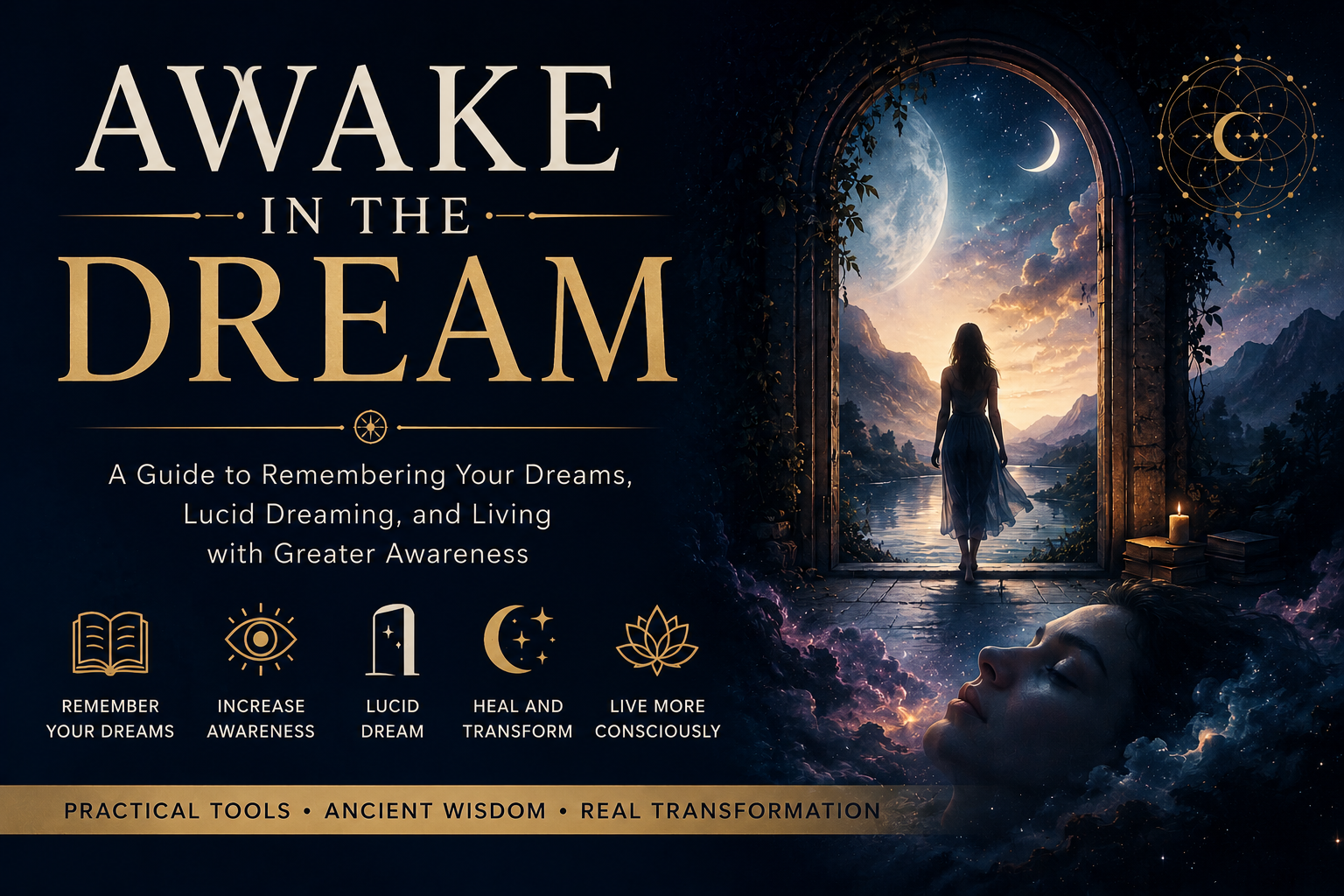
There is a part of you that never sleeps. This book for that part.
For over thirty years I’ve been fascinated by dreams. They’ve frightened me, comforted me, challenged me, healed me, and completely changed the way I understand myself. They’ve introduced me to forgotten parts of my own psyche, helped me move through trauma, inspired creativity, and reminded me that consciousness is far more mysterious than we often allow ourselves to believe.
This book isn’t about becoming an expert dream interpreter.
It’s about becoming a better listener. I have a feeling your dreams have been trying to talk to you for a very long time.
There is a part of your life you spend asleep. Not only at night, but in the way you move through waking reality. You pass through thoughts, emotions, conversations, and environments that feel solid and meaningful, sometimes overwhelming, and yet so much of it is never fully seen. It is reacted to, interpreted, avoided, and consumed.
Dreamwork begins with a simple reversal:
What if awareness itself can wake up anywhere?
This book is an invitation to that question.
Not as theory, as practice. As a way of remembering something that was never truly lost. A return to presence that does not end when your eyes close. Dreams are not separate from life. They are a continuation of consciousness in another form. They speak in symbols, images, emotions, fragments, encounters that do not follow the logic of waking thought yet follow a deeper logic of meaning. A logic you already know, even if you have forgotten how to listen.
You already dream every night, so the question is not whether dreaming is happening. The question is whether you are aware of it when it happens. And even more quietly:
What changes when awareness begins to enter the dream itself?
This is where practice begins. Not with control or force. But with attention. We begin to pay attention to waking life. Especially the subtle thresholds between states of consciousness. Because what you call waking and what you call dreaming are not as separate as they appear. They are movements within the same field of awareness, and your attention to this field can be trained.You begin by noticing the details of your waking life. How the Sun glistens off the leaves on trees. The unique shapes and sizes of everyday objects. How your body feels in relation to ordinaryobjects you encounter regularly. Questioning reality in small, almost invisible ways until consciousness begins to loosen it’s grip and finally expands beyond your previous capacity.
Over time, something shifts. You start to recognize patterns in waking life. Your relationship to those patterns is easily reflected in your day-to-day reality. Things you had previously overlooked begin to be revealed and solutions to unresolved issues become apparent. You begin to remember fragments of dreams upon waking. Symbols repeat across nights like quiet echoes as your inner world begins to reveal itself as structured, responsive, and intelligent.
And then something more intimate happens:
You realize the same awareness you bring to daily life can be brought to dreams. You begin asking, softly at first:
Where am I right now?
How did I get here?
What is happening beneath the surface of this moment?
Am I present, or am I elsewhere?
These are not philosophical questions. They are doorways and this book is structured as a path to and through those doorways. It begins with simple acts of noticing details, remembering, and living with more intention.
As we journey through dreamtime, we move into threshold states, those quiet passages between sleep and waking where perception becomes fluid and unclaimed. We open into lucidity, the moment you recognize you are dreaming while you are still in the dream. And eventually, it turns toward something deeper still:
A way of relating to reality as symbolic, responsive, and alive. But before anything else is understood, one thing must be felt: This work is not about escaping reality. It is about becoming more awake inside of it. Including what is feared, what is secretly longed for, what is uncertain and unresolved. Once you begin working with dreams, you will inevitably meet parts of yourself that have been left unattended in waking life. Emotions, images, memories and situations that feel familiar and intense. Dreams reveal what consciousness has not yet integrated and integration is what turns experience into wholeness. As you move through this book, you will be invited into simple, recurring acts of awareness:
- remembering your dreams
- noticing attention throughout the day
- tracing your thoughts backward through time
- observing the threshold into and out of sleep
- writing immediately upon waking
- questioning reality in subtle ways
These practices are not separate from life. They are done during waking life and make life be seen more clearly. There is no need to believe anything in advance. Only to observe. To notice and to stay curious. Over time, something radical reveals itself: Awareness is not something you possess. It is something you learn to remain within across states of being, identities, waking and dreaming life.
This is the beginning of waking up in the dream.